Don Buchla Documentary on Kickstarter – 10 Days To Go

Clarity Films

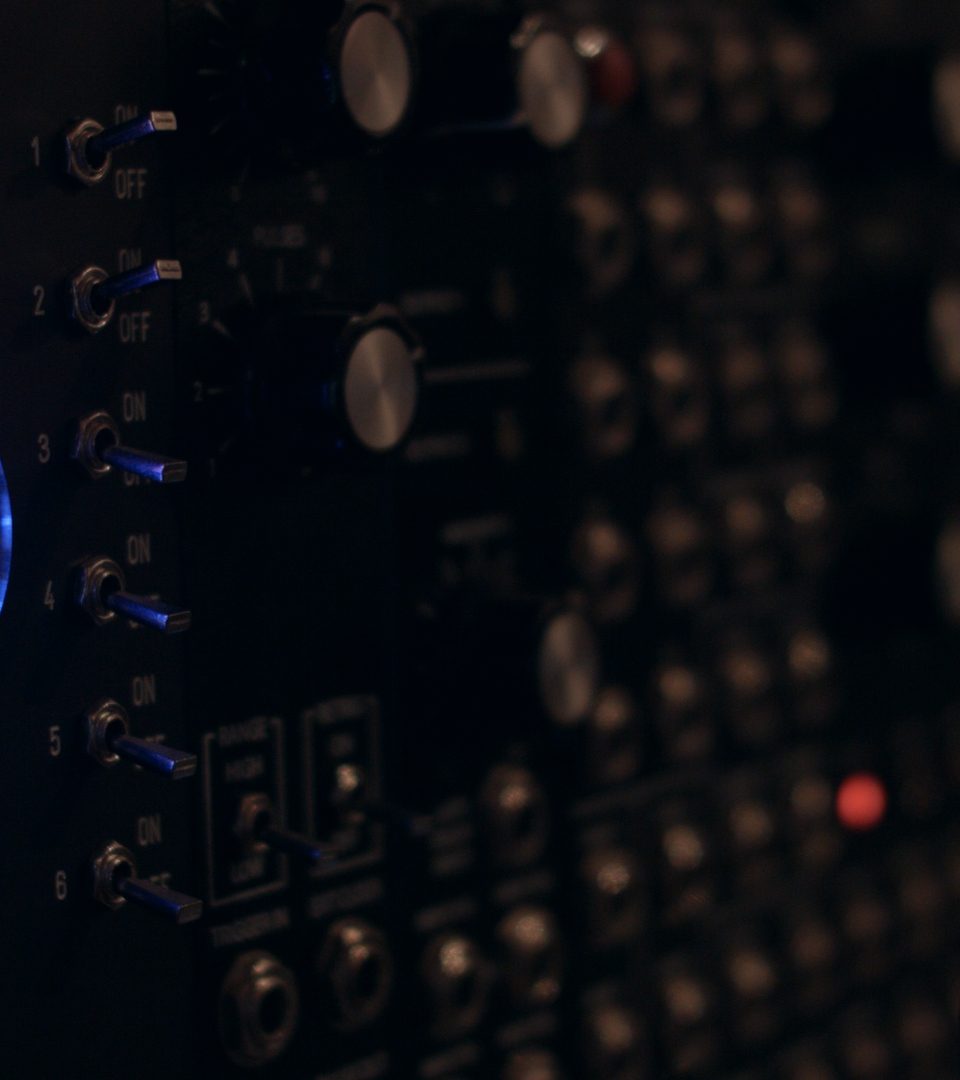
Producer/director Connie Field and editor Gregory Sharpen of Clarity Films are working on a documentary about the synth legend Don Buchla. They started a Kickstarter project to raise the funds to be able to finish the documentary. They have 10 days left to reach their goal of $25,000. Please check it out if you’re interested in learning more about Don Buchla and his amazing instruments.

Connie Field: “When we’ve told people that we’re preparing a documentary about Don Buchla, we get one of two reactions: a) Wow!  It’s about time  The man’s a genius!  Why hasn’t this happened already? or b) Don who?

We want to make a movie that can live up to the expectations and desires and hopes for the people who answered a), and that can introduce Don in the best way possible to those who answered b).”

Don Buchla

Don Buchla, 2012

Don Buchla

Don Buchla is a remarkable man. He created a unique modular analog synthesizer which changed the way people think about, compose and perform music. Buchla designed his instruments with the musician in mind. He designed the front panels of his modules  first, then the electronics behind it. This approach resulted in unique and flexible modules with dense functionality with names like “Source of Uncertainty”.

The list of musicians and composers who use Buchla’s instruments range from avant-garde composer Morton Subotnick to Nine Inch Nails, and all in between. With a passion for music and engineering, Don Buchla created electronic musical instruments the world had never dreamed of before.

A little bit of history

Don Buchla created his first instrument in 1963: the 100 series Modular Electronic Music System. The 200 series Electric Music Box followed in 1970.

In 1972 Buchla created the famous Buchla Music Easel, a performance instrument.

The Buchla 400, with video display, came to life in 1982.

Entering the age of MIDI, the Buchla 700 was released in 1987. Buchla saw the potential of MIDI for alternative controllers and shifted his attention to the design of controllers: Thunder in 1990 and Lightning in 1991. An updated version, Lightning II was released in 1996.

In 1995, Don Buchla designed the OB-Mx for Oberheim.

In 2002, he decided to revive the 200 series and this resulted in new and improved modules which he called the 200e series.

In 2012 the Buchla Music Easel was released again in its original form.

Posted in Filmmaking, Music | Tagged , , , , , | Leave a comment

LEGO Turing Machine Video in Jerusalem Science Museum

Two months ago I was approached by Nathan Zeldes, curator and scientific advisor for the CAPTCHA exhibition of the Jerusalem Science Museum in Israel. He asked if he could use my LEGO Turing Machine video for the exhibition. The video was to be displayed next to a replica of the Turing machine they were building.

Jerusalem Science Museum CAPTCHA exhibition - entrance

Jerusalem Science Museum CAPTCHA exhibition – entrance

Tri-lingual

As the museum is tri-lingual, Nathan asked me to provide a high definition version of the video without English captions. Three versions of the video would be produced: with Hebrew, Arabic and English captions. I rendered a new version without captions which I send to Nathan and his team to work on.

Murphy’s Law

While I was attending the Philip Bloom workshop in Brussels I received an urgent e-mail from Nathan. He wrote that the video without captions had accidentally be deleted. As the deadline for the exhibition was approaching, time was running out. I uploaded the video again as soon as I got home. As far as I know the videos were finished in time for the exhibition. Murphy’s Law in practice…

LEGO Turing Machine at the exhibition

Replica LEGO Turing Machine on display next to my video

Replica LEGO Turing Machine on display next to my video

The CAPTCHA exhibition of the Jerusalem science museum opened last month. A little replica LEGO Turing Machine that was build by the science museum team was on display. Next to the LEGO Turing machine a little screen shows the video I provided. The visitor can choose to watch it in one of the three available languages.

The LEGO Turing Machine video on display in the Jerusalem Science Museum

The LEGO Turing Machine video on display in the Jerusalem Science Museum

It’s great to see so much interest in the LEGO Turing Machine and the video, especially for teaching purposes. By making the video we wanted to show people how the machine worked and that it is fairly easy to built one yourself. Apparently we succeeded in that goal. CWI is planning to provide more detailed building instructions in the future so anyone can built this great machine.

Many thanks to Nathan Zeldes for providing the pictures shown here.

Posted in Filmmaking | Tagged , , , , , , , , | 3 Comments

Philip Bloom workshop in Brussels

Philip Bloom during the Brussels workshop in hotel Bloom

Philip Bloom during the Brussels workshop in hotel Bloom

This week, I attended a 2-day workshop by Philip Bloom in Brussels. There were 24 participants.

During the first day we were given an assignment to shoot a 30 second video about something ordinary and make it look interesting. We had to find a subject and shoot the footage within a 2 hour period. In the evening, after the first day of the workshop had ended, the video had to be edited.

In the morning of the second day we watched everybody’s videos and discussed them. It was interesting to see what everybody had come up with and what they used to visualise their ideas. I made two videos of objects in my hotel room.

The first video, “Sitting”, is the one I presented at the workshop.

For the second video, “Ma Chère”, I used additional footage I shot of interesting artwork on the walls of the hotel room. My initial idea was to use both images together in one video but while editing I decided to make two separate videos with the available footage. Thanks to the artist, Martin A. Dege, for his kind permission to use his art in the video.

Both videos were shot with the Panasonic AF101 using Voigtlander 25mm f0.95, Nikon 50mm f1.4 and Nikon 55mm f2.8 macro lenses. A small bi-color LED light was used for lighting where needed.

All in all I had a great workshop. Philip is a very animated speaker and there was a lot to learn from just what he was telling from his 20+ year of experience. The assignment wasn’t really something I would like to do regularly but it did teach me to look at things differently. I would generally like more time to think about the video and plan things more but as an exercise this was just great.

Posted in Filmmaking | Tagged , , , , , , , , , | Leave a comment

Background Footage For The Title Sequence Of My Short Film

A couple of days ago I got an idea for the title sequence of my short film. I had already finished the title sequence itself which consisted of a few simple text animations. White font on a black background. A bit boring…

The idea was to shoot some out of focus footage of the set wall I used in the film with moving lights for adding a bit mystery.

Title sequence lighting diagram

Continue reading

Posted in Filmmaking | Tagged , , , , , | Leave a comment

Reshoot “I Want To Believe”

Last Saturday I did a reshoot of a couple of scenes for my short film “I Want To Believe”. All went well although there were still some things I could have done better. But I guess that’s the curse of every filmmaker.

I Want To Believe Reshoot 1

Instructing my daughter Zoë who plays a little part in the film

Continue reading

Posted in Filmmaking | Tagged , , , , , , , | Leave a comment

STIPOH Promo Video

Last year September, I shot a promo video for STIPOH (Stichting Promotie & Ontwikkeling Handboogsport), a Dutch foundation promoting archery.

They managed to secure an excellent location, the old open air theater “de Lichtenberg” in Weert, the Netherlands. At the time of shooting the theater was being renovated and we could only use it for a couple of hours.

Based on the location I came up with the concept and made a shot list of some basic shots I wanted to do. After setting everything up I explained to the archers what we were going to do and we started the shoot.

The video was shot in about 4 hours on a beautiful autumn afternoon using available light only. Everything went fairly smooth as the weather was perfect during the shoot and there weren’t any particularly difficult setups. I used Cinevate’s Atlas 30 slider in a couple of shots to add some horizontal movement.

The music used is from Andrew Kramer’s excellent Pro Scores DVD which allows you to make custom mixes based on the available layered audio tracks and effect sounds. I edited the video to the music for maximum impact.

Yesterday, STIPOH officially released the promo video on YouTube so now I can also show it here.

Posted in Filmmaking | Tagged , , , | Leave a comment

I Saw The Hobbit in 3D HFR

Tonight, I went to see the 3D HFR (High Frame Rate) version of The Hobbit. I read a lot about HFR the last couple of weeks and read positive things but also a lot of negative things of people who experienced the movie.

Just to tell you where I’m coming from: I don’t like 3D movies. I always go see the “normal” 2D version of a movie if possible. I think 3D adds nothing to a movie and it’s just a gimmick distracting the viewer from the real story.

That said, I wanted to experience the 3D HFR technology myself and make up my own mind about it. Now that I have seen the movie I want to point you to a blog post by Vincent Laforet titled “The Hobbit: An Unexpected Masterclass in Why HFR fails, and a reaffirmation of what makes cinema magical”. In many ways my experience of the movie was a lot like his.

Continue reading

Posted in Filmmaking | Tagged , , , | Leave a comment

Recording Additional Audio for my Short Film

Today I recorded additional audio for my short film “I Want To Believe”, also called ADR (Automated / Additional Dialog Replacement). I recorded the dialog of Martine, the voice actress, who, in the film, is on the phone with the protagonist.

I recorded the audio in the quiet living room of Martine’s home. I used a fairly simple setup. The microphone was an Audio Technica 2035 large diaphragm studio microphone which was connected to a Sound Devices MixPre mixer/preamp. The line out of the MixPre was fed into a Sony PCM-M10 portable audio recorder. The microphone was placed in a box filled with acoustic foam to negate reflections. I built this so-called porta booth myself. It was inspired by Harlan Hogan’s portable voice over recording booth. I forgot to bring the pop filter but it worked out just fine. Also, as the audio will be processed to sound like through a telephone this will not be an issue.

Continue reading

Posted in Filmmaking | Tagged , , , | Leave a comment